
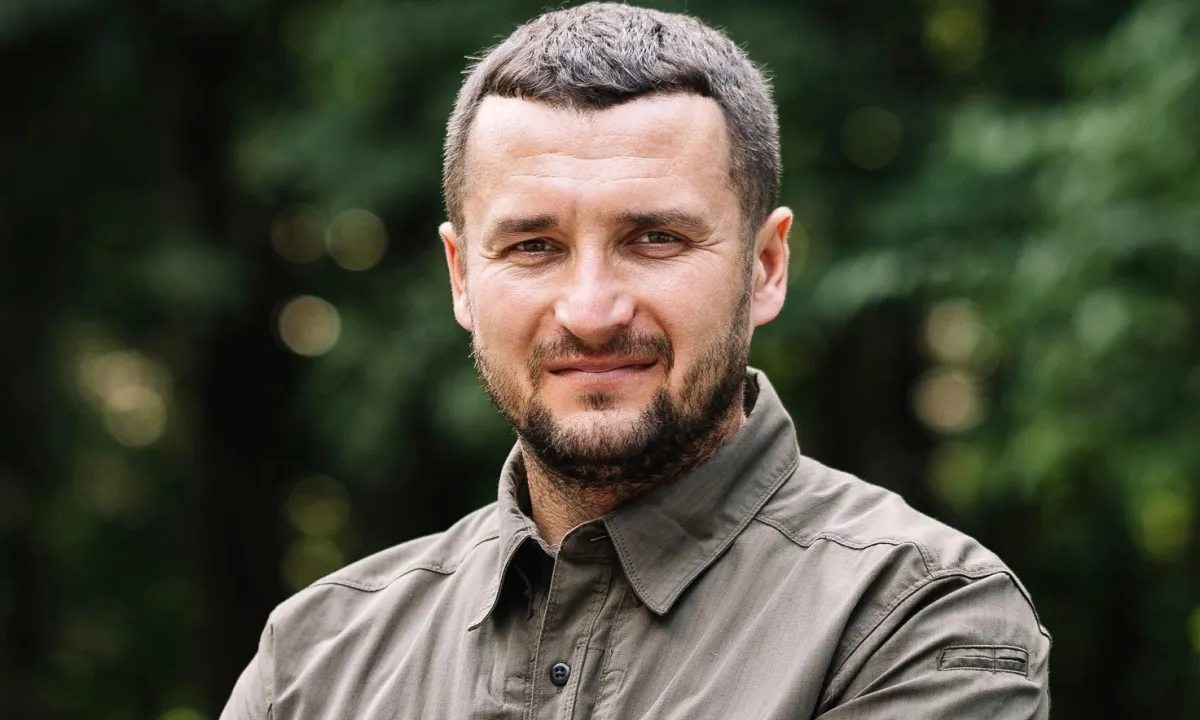
Yuriy Bolokhovets, Director General of the State Enterprise “Forests of Ukraine,” announced the end of his tenure at the helm of the state enterprise and spoke about the reform of the state forestry sector in 2023–2026. Here is his statement in full:
Today, I am finishing my tenure as Director General of the State Enterprise “Forests of Ukraine.”
When we began this reform, Ukraine’s state forestry sector consisted of hundreds of separate enterprises, each operating under different rules, with varying levels of efficiency, different management standards, and differing visions for the future. For decades, this system operated by inertia, and many believed it was impossible to change.
But we proved otherwise. In a short period of time, we managed to consolidate more than three hundred enterprises into a single system, implement modern corporate governance, international financial reporting, transparent timber sales, centralized procurement, and uniform operating standards across the country.
This was not just a reorganization on paper. It was one of the largest management reforms in the history of Ukraine’s public sector. As a result, we created a powerful, efficient, and financially sound company that has become one of the largest taxpayers among state-owned enterprises. We have demonstrated through our own example that, in a short time, a large state-owned enterprise can be made profitable, transparent, and manageable.
Here are the key achievements of the past three years in more detail:
Consolidating 360 forestry enterprises into a single management system
For the first time in many decades, Ukraine’s forestry sector has a future. We have laid the foundation for the transition from an outdated Soviet model to a modern European system of natural resource management. The forestry sector we inherited consisted of 360 separate forestry enterprises with varying standards of management, accounting, and financial discipline. This system made it possible to sell timber to a select group of favored processors. This included illegal logging, land grabs, and the “privatization” of forest land. It involved schemes such as in-house timber processing by forestry enterprises, and most importantly—chronic unprofitability: the sector survived on state subsidies while generating minimal revenue for the budget.
But over the course of three years, we managed to dismantle this system. As a first step, we consolidated the forestry enterprises and more than halved their number. In September 2022, the state-owned enterprise “Forests of Ukraine” was established—this allowed us to create a single, vertically integrated company and finally do away with the chaotic structure characterized by fragmented management. It became possible to phase out unprofitable operations and divest non-core assets. We closed a huge number of state-owned wood processing plants, which could not compete on equal footing with private businesses and often served as hotbeds of corruption.
Our organization today is a complex but unified system that manages 6.9 million hectares of forest land, more than 1,400 forest districts, and 9 regional offices. We employ 22,000 people. We have unique seed centers, hundreds of forest fire stations, and thousands of pieces of equipment.
The next step in the reform is corporatization. In September 2025, we began transforming the state-owned enterprise into a joint-stock company that will be 100% state-owned. This is the best form of management for a strategic asset, which Ukrainian forests undoubtedly are. It will provide the industry with greater operational flexibility while maintaining state control.
Financial recovery of the state forestry sector
At the start of the reform, the timber market operated under non-transparent conditions. A system of direct contracts flourished—forestry enterprises and buyers set prices on their own, which created opportunities for shadow schemes. In-house processing allowed forestry enterprises to simultaneously harvest timber, process it into finished products—while exaggerating the cost of processing—and sell at prices below market rates. As a result, in the last year before the reform began, the sector’s financial result was a loss of 150 million UAH, and its profitability was only 3.7%. The sector received state subsidies every year while paying only 4–5 billion UAH in taxes.
This system no longer exists today. We have shifted the sale of all forest products to the stock exchange. Direct contracts have been replaced by competitive exchange auctions. Prices are determined solely by demand and the competitive environment, not by backroom deals. We have created uniform conditions for more than 3,000 auction participants. We have introduced lot formation that takes regional specifics into account (for example, in Zakarpattia, where small businesses predominate, 90% of lots are less than 100 m³). We devised a way to prevent price spikes and introduced six-month forward contracts. The fulfillment rate for exchange contracts in 2025 was 90–95%. Today, the State Enterprise “Forests of Ukraine” publishes information on every (!) exchange transaction: who contracted what volume and at what price. I don’t know of any European country with this level of transparency.
Major changes have also affected logging services. Today, all procurement is carried out through the Prozorro system. We manage to maintain a monthly logging volume of 1 million cubic meters of timber.
The changes yielded results as early as 2023, but 2025 set record figures in the entire history of the state forestry sector: net revenue of 29.9 billion UAH, pre-tax profit of 8.4 billion UAH, a profit margin of 28.1%, and taxes paid totaling 15.8 billion UAH. Over three years, the State Enterprise “Forests of Ukraine” transferred more than 35 billion UAH to the consolidated budget—without a single hryvnia in state subsidies. This positive trend continues into 2026. Forecast for the first half of 2026: pre-tax profit of 6 billion UAH, a profit margin of 33.7%, and tax payments of 10 billion UAH (!). Thus, we have succeeded in transforming the state forestry sector from a subsidized entity into one of the largest taxpayers among Ukraine’s state-owned enterprises.
Preparing for corporatization and laying the foundations for modern corporate governance and ERP
The results of our work are measured not only in billions of hryvnias in profits and taxes. We have begun the transition to a corporate management model designed to ensure independence from political cycles, transparency in decision-making, and accountability for results. Before the reform began, the forest enterprise management system was weak and archaic. Each forest enterprise used its own accounting system. There was no unified database—from the forest district to the central office, there was not a single standardized tool for managing business processes.
Today, things are different. A supervisory board has been formed. Corporate governance principles have been implemented in accordance with the requirements applicable to joint-stock companies. The transition to International Financial Reporting Standards (IFRS) is underway: an independent fair value assessment of assets has been conducted, and an inventory and registration of property rights to land have begun.
In 2025, the enterprise began preparations to implement an ERP (Enterprise Resource Planning) system: a project team was formed, functional requirements were defined, and a competitive selection process for a solution provider was launched. The result will be the automation and standardization of management of all the enterprise’s business processes and a unified database at all levels.
In 2026, the State Enterprise “Forests of Ukraine” is an organization that already operates according to corporate rules and is in the active phase of transforming into a joint-stock company.
Building a Professional Management Team
The reform of the state forestry sector is taking place amid a full-scale war. While some employees are fighting on the front lines, others are providing the country with resources, supporting the economy, building a new management system, and simultaneously working to preserve the state’s greatest natural resource—the Ukrainian forest.
But the state of our human resources before the reform began was characterized by disorganization, a predominance of administrative positions, and low salaries. We inherited a workforce of over 29,000 full-time employees. The average salary in the sector was 12,348 UAH. People who actually worked in the forests were paid a pittance. And leadership positions were not always filled based on professional criteria.
Thanks to structural optimization, we managed to reduce the workforce from 29,723 people in 2023 to 22,660 in 2026—exclusively by cutting the administrative staff, not the operational workforce. The average salary rose from 21,165 UAH (in 2023) to 35,541 UAH (in 2026)—a 68% increase over two years (!).
One of the key decisions was the introduction of uniform qualification requirements for managers at all levels. Only specialists who meet two criteria are appointed to management positions: they must have a relevant education and proven management experience. This allowed us to build a professional management team—we were able to minimize the risk of random people being appointed to key positions.
A separate area of focus is our work with military personnel. 2,122 of our employees have been mobilized. 564 have been demobilized—all of them, without exception, have been rehired by the company. All combat veterans receive a monthly 20% salary supplement; medical coverage includes up to 50,000 UAH for medications and up to 100,000 UAH for surgery. The company funds the education of the children of employees who have died in military service.
Preparing the Carpathians for a Transition to Nature-Based Forestry and Moving Away from Clear-Cutting
For decades, the Carpathians were logged using the clear-cutting method for main harvest. This is a radical approach: the entire tree stand in a plot is cut down, after which the area is replanted, usually with a monoculture. It’s fast and cheap, but devastating to the ecosystem—it disrupts the water balance, causes valuable tree species to disappear, and leads to soil degradation. Carpathian communities and environmentalists have opposed this practice for years, but the system was resistant to change, and nothing changed.
Today, things are different. The State Enterprise “Forests of Ukraine” has created all the necessary organizational, technological, and personnel conditions to phase out clear-cutting for primary harvesting in the Carpathians, starting next year. This marks a transition to nature-based forestry across the entire Carpathian forest fund—approximately 1 million hectares. In simple terms, this means selective logging, preserving the multi-aged structure of stands, natural forest regeneration, and maintaining biodiversity.
FSC certification (Forest Stewardship Council certification) has confirmed that our standards meet international requirements: the area of certified forests managed by the State Enterprise “Forests of Ukraine” is 4.739 million hectares; based on this figure, Ukraine ranks third in Europe after Sweden and Turkey.
Preserving Natural and Unmanaged Forests as a Future Reserve of Biodiversity and a Nature Conservation Fund
Hundreds of thousands of hectares of natural forests throughout Ukraine have been neglected by the state for decades. No one monitored them, kept records of them, or protected them from illegal logging, plowing, or development. Formally, these forests existed; in reality, they belonged to no one.
In recent years, we have managed to incorporate approximately 30,000 hectares of such forests into the state forest fund. And just the other day, this figure increased by another 18,000 hectares thanks to forestry lands in the Odesa region that were transferred to the permanent use of the state enterprise “Forests of Ukraine.” This is a very significant achievement and the result of several years of painstaking work. These are natural ecosystems with a high level of biodiversity and candidates for inclusion in the nature reserve fund. We have also begun the restoration of forests in the south—6,000 hectares of new forest have been planted in a region where forestry had virtually ceased to exist.
In fact, we have launched a systematic effort to conserve and return to the state forests that have long lacked proper ownership and protection. The potential scope of this work is up to 1.5 million hectares across Ukraine. I am convinced that this initiative will become one of Ukraine’s most important nature conservation projects in the coming decades.
Creating modern forestry infrastructure—roads, technical equipment, firefighting infrastructure, and recreational facilities
At the start of the reform, the state forestry sector consisted of hundreds of fire stations filled with old scrap equipment. Outdated machinery that hadn’t been updated since Soviet times. There was a catastrophic shortage of forest roads, which made logging unprofitable. The density of the road network was significantly lower than that of neighboring countries.
Over the past three years, the largest investments in the history of the state forestry sector have been made, totaling over 1.3 billion UAH, to develop forest infrastructure. We built 343 km of forest roads and purchased 137 units of specialized equipment. In 2024, we carried out the largest upgrade of firefighting equipment in the last 30 years. In 2025, we modernized forestry equipment, including signing a contract to supply harvesters from Sweden. Thanks to the profitable operations of the State Enterprise “Forests of Ukraine,” 100% of forest fire stations were equipped with modern tools and equipment. In 2024, despite the abnormal heat and lack of precipitation, the area affected by fires was significantly smaller than the average for 2015–2020.
Since 2023, 154 modern recreational sites have been established in the areas most prone to wildfires—a significant expansion of the network, which previously consisted of 1,500 sites across the country. In total, they are visited by about 3 million people per year. Organized recreational areas reduce unregulated recreational pressure and lower the number of fires caused by human activity. The recreation program has preserved thousands of hectares of forest for the state. This is our tangible contribution to preserving forests for future generations. We have laid the foundation for Ukrainian forests to be not only a source of resources but also a safe, accessible, and comfortable space for people. That is why other European countries are already studying our experience.
Support for the Armed Forces of Ukraine
Over the past three years, the state-owned enterprise “Forests of Ukraine” has provided assistance to the Armed Forces of Ukraine totaling 1.7 billion UAH. The volume of lumber and forest products donated free of charge amounted to 520,000 m³. The enterprise also donated 156 vehicles and pieces of specialized equipment (46 trucks, 88 passenger cars, and 23 units of specialized equipment), and is purchasing UAVs and FPV drones, Starlink terminals, generators, charging stations, drone detectors, night vision devices, tablets, and laptops for the brigades under its patronage.
Goals for 2026–2027
The main priority is to complete the corporatization process. The transformation of the State Enterprise “Forests of Ukraine” into a joint-stock company wholly owned by the state is the final institutional step in the reform. Next: the phased implementation of an ERP system and the transition of key business processes to a unified digital environment, adopting international financial reporting standards, continuing the industry’s largest-ever equipment modernization program with a focus on mechanizing timber harvesting, expanding the network of forest seed centers, increasing the scale of demining in de-occupied forest areas, and expanding the forest cover by incorporating natural forests and reforesting vacant lands in collaboration with local communities.
The strategic goal is to increase Ukraine’s forest cover from the current 15.9% to 20%, which is defined by the State Forest Management Strategy through 2035 as the scientifically sound optimal level. In Poland, it is 30%, and in Finland, 64%, so we have room to grow.
ХХХ
So, the reform has been implemented. But every major reform reaches a point where it is much easier to turn back than to move forward. That moment is right now. If the reform is carried through to the end, Ukraine will have a modern, profitable, environmentally responsible, and independent forest management system. If, however, the reform is halted or reversed, Ukraine risks losing not only years of work by thousands of people, but also risks returning to a fragmented system where manual control, political influence, lack of transparency, and constant struggle for resources—rather than their development—will once again prevail.
That is precisely why it is important today to focus not on specific leaders or positions. It is important to talk about our responsibility to future generations. Because in ten or twenty years, no one will remember the names of officials or political disputes. People will judge us by one thing alone: whether we were able to leave behind a strong Ukrainian forest that serves the state, society, and the country’s future. And if that happens—it will mean that our team has done its job.
I would like to personally thank Viktor Smal', Head of the State Agency for Forest Resources of Ukraine, and the entire agency team—as the central executive body that implemented state policy as effectively as possible during the reform of the enterprise.
I would like to thank the entire team at the State Enterprise “Forests of Ukraine”—more than 22,000 people whose daily work laid the foundation for today’s results. Special words of gratitude go to the leaders who took on the responsibility of carrying out the reform during the most difficult period. Many decisions were unpopular, complex, and risky. Some of these people no longer work in the system today, but they were the ones who laid the foundation for the changes whose results we see now. This is their contribution to the future of Ukraine’s forestry sector.
There is still much work ahead, but the foundation has already been laid. The forest lives on. Ukraine will prevail!